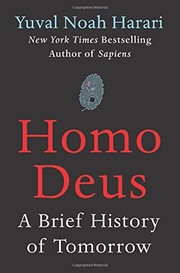
A Brief History of Tomorrow
Yuval Noah Harari · 2015 · Futurism
Read
Homo Deus picks up where Yuval Noah Harari’s Sapiens left off and looks ahead. He argues that for most of history humanity’s great problems were famine, plague and war, and that these have now become largely manageable. With them under control, humanity’s next goals are likely to be defeating death, engineering lasting happiness and gaining god-like powers through biotechnology and computing.
Harari traces how humanism, the belief that human feelings and choices are the ultimate source of meaning, came to dominate modern life. He asks what happens when science treats organisms as algorithms and data systems know us better than we know ourselves. He ends with Dataism, a possible new creed that values information flow above human experience, and presents these scenarios as possibilities rather than predictions.
Key insights
- Humans dominate because they cooperate flexibly in large numbers, held together by shared stories such as money, nations and religions.
- Solving old problems creates new ambitions. Once famine, plague and war became manageable, Harari expects attention to turn to extending life and engineering happiness.
- Modern life rests on a humanist bargain: we gave up belief in a cosmic plan in exchange for power, and made human feelings the source of meaning.
- If algorithms come to know our preferences better than we do, authority may shift from individuals to data systems, challenging liberal ideas of free choice.
- Treat forecasts as a way to widen options. Harari’s scenarios are meant to prompt choices now, not to describe a single inevitable future.
Read it if you want a provocative, big-picture look at how technology may reshape human values, work and identity.