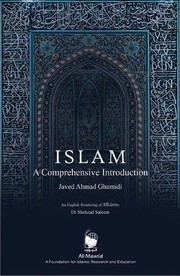
Javed Ahmad Ghamidi · 2009 · Religion
Read
Javed Ahmad Ghamidi, a Pakistani scholar of the Quran and Islamic law, wrote this work in Urdu as a condensed version of Mizan, his longer treatise on the contents of Islam. Shehzad Saleem translated it into English. It presents his conclusions plainly, leaving out most of the technical argument behind them.
Ghamidi starts from the sources of the religion. He treats the Quran as the final criterion for judging everything else, and the Sunnah as religious practices handed down through the consensus and continuous observance of the Muslim community. From there he outlines belief, moral teaching and worship, and the law as it applies to family, society, politics, the economy, and crime and punishment. His approach follows the school of Hamiduddin Farahi and Amin Ahsan Islahi.
Key insights
- Ghamidi treats the Quran as the decisive criterion. Any other source, report or interpretation is judged by whether it agrees with the Quranic text.
- He distinguishes the Sunnah, religious practices handed down by the community’s consensus and continuous observance, from individual hadith reports, which he treats as explanation rather than an independent source.
- He separates religion itself from later human scholarship. The rulings of jurists are valuable efforts to understand it, but are not binding revelation.
- Reading the Quran as a coherent whole, with close attention to context and classical Arabic, guards against lifting single verses out of their setting.
- In his reading, the purpose of religion is purification of the self. Worship and law serve moral and spiritual growth rather than existing for their own sake.
Read it if you want a structured, reasoned overview of Islamic belief, worship and law from an influential contemporary scholar.