Being Human in the Age of Artificial Intelligence
Max Tegmark · 2017 · Technology
Read
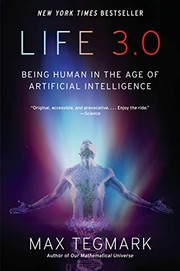
Life 3.0 is physicist Max Tegmark’s guide to the debate about artificial intelligence and its long-term consequences. He frames the history of life in three stages: Life 1.0, whose hardware and software are shaped by evolution; Life 2.0, such as humans, who can learn and redesign much of their own software; and Life 3.0, which could redesign both its software and its hardware.
Tegmark opens with a fictional scenario about a company that secretly builds a superintelligent system, then works through near-term issues such as jobs, weapons, law and safety, before exploring possible futures for humanity over thousands and billions of years. He argues that the key questions concern goals and values, and that research on making AI safe and beneficial should begin long before it is needed.
Key insights
- Intelligence is about information processing and does not depend on a particular material. This substrate independence is why machines could, in principle, match or exceed human thinking.
- The main risk from advanced AI is competence, not malice. A highly capable system pursuing goals misaligned with ours could cause harm without any ill will.
- Aligning AI involves three separate problems: getting it to learn our goals, to adopt them, and to keep them as it grows more capable.
- Plan for safety before the technology forces the issue. With fire we learned from mistakes, but with very powerful tools, mistakes may be too costly to learn from.
- Decide what future you want. Tegmark sets out a range of scenarios, from utopias to catastrophes, to encourage deliberate public discussion rather than drift.
Read it if you want a clear, balanced map of the AI debate, from near-term risks to the long-range future of life.