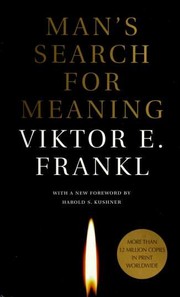
Viktor E. Frankl · 1946 · Psychology
Read
Viktor Frankl, a Viennese psychiatrist, survived several Nazi concentration camps, including Auschwitz, during the Second World War. The first part of this short book describes camp life from a psychologist’s point of view: the shock of arrival, the apathy that followed, and the difficult return to ordinary life after liberation. Frankl observed that prisoners who held on to a reason to live, such as a loved one or unfinished work, were more likely to endure.
The second part introduces logotherapy, his school of psychotherapy, which treats the search for meaning as a basic human drive. He argues that meaning can be found through work or creation, through love and experience, and through the attitude we take towards suffering we cannot avoid.
Key insights
- Meaning can come from three sources: meaningful work, love and experience, and the attitude you choose towards suffering you cannot change.
- Even when almost everything is taken away, a person keeps the freedom to choose their attitude. Frankl calls it the last human freedom.
- Having a clear why, such as someone waiting or work to finish, makes hardship more bearable. Name yours before a crisis arrives.
- Happiness and success cannot be pursued directly; they follow as by-products of commitment to a cause or a person beyond yourself.
- Feelings of emptiness and boredom, which Frankl calls the existential vacuum, often signal a lack of meaning rather than a lack of pleasure.
Read it if you want a short, humane account of surviving extreme suffering and a practical framework for finding purpose.