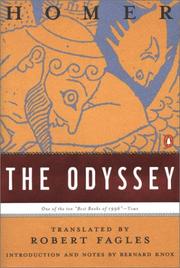
Homer · c. 700 BCE · Poetry
Currently reading
Ten years after the fall of Troy, Odysseus, king of Ithaca, has still not come home. In his absence, a crowd of arrogant suitors has taken over his palace, feasting on his wealth and pressing his wife, Penelope, to remarry, while his young son, Telemachus, lacks the power to stop them. The poem moves between Telemachus, who sets out to find news of his father, and Odysseus himself, held on a remote island and later recounting his years of wandering.
Those adventures include the one-eyed Cyclops, the enchantress Circe, a visit to the land of the dead, the Sirens and the twin dangers of Scylla and Charybdis. Throughout, Homer’s epic explores cunning, endurance, loyalty, hospitality and the long work of returning home.
Key insights
- Odysseus survives mainly through wit rather than strength, using disguise, patience and persuasive words. Intelligence and restraint often achieve more than force.
- Pride has a price. When Odysseus boasts his real name to the blinded Cyclops, he earns the lasting anger of the sea god and lengthens his journey.
- Before sailing past the Sirens, Odysseus has himself tied to the mast. Binding your future self in advance is a practical defence against predictable temptation.
- Penelope matches her husband in cunning, delaying the suitors by weaving a shroud by day and secretly unpicking it at night. Loyalty here is active and resourceful.
- Hospitality to strangers is a sacred duty in Homer’s world, and how people treat guests is one of the clearest tests of their worth.
Read it if you want the original adventure behind countless later stories of journeys, temptation and coming home.