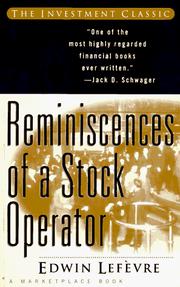
Edwin Lefèvre · 1923 · Investing
Read
Edwin Lefèvre’s book is a lightly fictionalised account of the career of Jesse Livermore, a famous speculator of the early twentieth century, narrated by a character called Larry Livingston. It follows him from a teenage job chalking prices on a brokerage board, through his success in the bucket shops, where customers bet on price movements, to the major markets of New York, where he made and lost several fortunes.
Livingston describes his mistakes as frankly as his successes. He explains how he learned to follow the broad trend, hold winning positions, ignore tips and trust his own judgement. Although the setting is a century old, the book’s lasting argument is that markets repeat themselves because human nature, driven by hope, fear and greed, does not change.
Key insights
- The narrator says his big money came from sitting tight through major trends, not from constant trading. Patience with a correct position is rarer than being right.
- The typical speculator hopes when a position is losing and fears when it is winning. The book argues this is backwards: cut losses early and let profits run.
- Tips and other people’s opinions are dangerous. Some of Livingston’s costliest mistakes came when he abandoned his own reading of the market for someone else’s.
- Markets change in detail but not in character, because the same emotions that drove prices a century ago still drive them today.
- Livingston added to positions only when the market proved him right, rather than averaging down on trades moving against him.
Read it if you are interested in markets and want an honest, readable account of the psychology behind speculation.