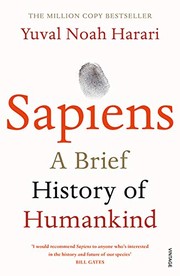
A Brief History of Humankind
Yuval Noah Harari · 2011 · History
Read
Historian Yuval Noah Harari surveys the whole history of our species, from an unremarkable animal in East Africa to the dominant force on the planet. He organises the story around three revolutions. The Cognitive Revolution, around 70,000 years ago, gave humans the language to share fictions and cooperate in large numbers. The Agricultural Revolution, about 12,000 years ago, fed more people but, he argues, made most individual lives harder. The Scientific Revolution, beginning about 500 years ago, grew from a new willingness to admit ignorance.
Along the way, Harari explains how money, empires and religions drew humankind together, and asks whether all this power has made people happier. First published in Hebrew in 2011, it became an international bestseller after its English edition appeared in 2014.
Key insights
- Large-scale cooperation rests on shared stories; money, nations, companies and human rights work because millions of people believe in them.
- Beware the luxury trap: comforts quickly become necessities, and each new convenience brings obligations nobody planned for.
- Progress for the species is not the same as a better life for individuals; more food and power did not guarantee happiness.
- Science advanced once people admitted what they did not know; that willingness opened the way to exploration and discovery.
- Treat the book as a provocative overview rather than settled fact; specialists dispute several of its broad claims and simplifications.
Read it if you want a readable big-picture history that challenges assumptions about progress, money, religion and human nature.