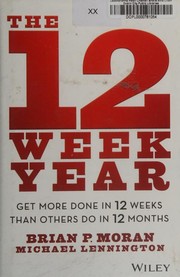
Get More Done in 12 Weeks than Others Do in 12 Months
Brian P. Moran and Michael Lennington · 2013 · Productivity
Read
Brian Moran and Michael Lennington argue that annual goals quietly encourage procrastination. With twelve months ahead, deadlines feel distant and urgency tends to arrive only in the final weeks of the year. Their answer is to treat every twelve weeks as a complete year, with its own goals, plan and finish line.
The system links a long-term personal vision to a small number of twelve-week goals, then breaks each goal into weekly tactics. Every week you review progress, plan the week ahead and score yourself on the share of tactics you completed. The authors present this as an execution system rather than a planning method, since most people already know what to do. They also cover time blocking, peer accountability meetings and the emotional stages of change.
Key insights
- Shrinking the planning horizon to twelve weeks keeps deadlines close, so urgency stays steady all year instead of peaking in a last-minute scramble.
- Score each week by the percentage of planned tactics you completed. The authors suggest that consistently hitting about 85 per cent is usually enough to reach your goals.
- Track lead indicators, the actions you control, as well as lag indicators such as income or weight. Lead measures warn you early when you are drifting.
- Protect time with blocks: a weekly three-hour strategic block for important work, short daily buffer blocks for email and admin, and regular breakout blocks for rest.
- Expect the emotional cycle of change. Initial enthusiasm turns to doubt once the costs of new habits appear, and results come from pushing through that dip.
Read it if you set ambitious annual goals but find most of the real work happens in a rush near the deadline.
My own planning system is built on this idea: see The 12-week planning system I actually stick to.