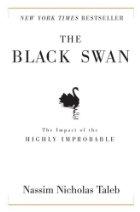
The Impact of the Highly Improbable
Nassim Nicholas Taleb · 2007 · Philosophy
Read
Nassim Nicholas Taleb defines a Black Swan as an event that lies outside normal expectations, carries an extreme impact, and is explained after the fact as though it had been predictable. He argues that history, markets, science and individual lives are shaped far more by these rare events than by the steady trends we plan around.
The book is an attack on our confidence in prediction. We turn random events into tidy stories, ignore the evidence we cannot see, and apply bell-curve statistics to areas where a single extreme can outweigh everything else. Taleb contrasts Mediocristan, where outliers barely matter, with Extremistan, where they dominate. His advice is not to forecast better but to arrange your affairs so that surprises cost you little and might benefit you greatly.
Key insights
- Ask whether you are in Mediocristan or Extremistan. Averages work for height or weight, but wealth, book sales and market crashes are driven by extremes.
- Remember the turkey fed every day for a thousand days. A long record of safety can build false confidence just before a catastrophic surprise.
- Beware the narrative fallacy. We compress random events into neat cause-and-effect stories, which makes us overconfident about how much we understand.
- Consider silent evidence. The successes you see are survivors, while the many who tried the same thing and failed are invisible, which distorts the lessons drawn.
- Use a barbell approach: keep most resources extremely safe and place a small portion in bets with limited downside and open-ended upside.
Read it if you rely on forecasts and plans and want to think more honestly about risk, luck and uncertainty.