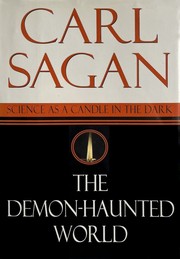
Science as a Candle in the Dark
Carl Sagan · 1995 · Science
Read
Carl Sagan argues that science is our best tool for separating truth from wishful thinking, and that a society which loses the habit of sceptical inquiry becomes easy to mislead. He examines popular beliefs of the 1990s, including alien abductions, a supposed face on Mars, faith healing and recovered memories of abuse, and sets them beside the witch hunts of earlier centuries.
The book is not a sneer at believers. Sagan presents scientific thinking as a skill anyone can learn, combining openness to new ideas with rigorous testing. He offers a practical toolkit for spotting weak arguments and common logical fallacies. He also warns that a society which depends on science and technology, yet barely understands them, risks sliding into superstition and manipulation by the powerful.
Key insights
- Use a baloney detection kit: seek independent confirmation, consider several explanations, quantify where possible and prefer the simplest explanation that fits the evidence.
- A claim that cannot be tested, like an invisible dragon that leaves no trace, is not worth much, however sincerely it is held.
- Balance openness with scepticism. Too much openness makes you gullible, while too much doubt blinds you to new ideas that turn out to be true.
- Arguments from authority carry little weight. Experts can be wrong, so a claim has to stand on its evidence rather than on who makes it.
- Science is trustworthy because it corrects itself. Admitting and fixing errors is built into the method, unlike belief systems that never change their answers.
Read it if you want to sharpen your scepticism and learn practical tools for testing the claims you meet every day.