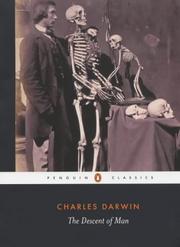
Charles Darwin · 1871 · Science
Currently reading
Twelve years after On the Origin of Species, Darwin applied his theory to humans. He argues that people descended from earlier primate ancestors, pointing to shared anatomy, similar embryonic development and rudimentary organs that make sense only as leftovers from a common past. He also contends that human mental powers, emotions and the moral sense differ from those of other animals in degree rather than kind.
Most of the book develops his theory of sexual selection: traits that spread because they help individuals win mates, through competition between males or choices made by females. He uses it to explain ornaments such as bright plumage, and some differences between human populations. Parts of the book reflect Victorian assumptions about race and sex that modern readers will rightly question.
Key insights
- Darwin treated human uniqueness as a matter of degree. Reasoning, memory, emotion and sociability all have recognisable roots in other animals.
- He argued that conscience grows from social instincts such as sympathy, combined with memory, language and reflection, giving morality a natural history.
- Sexual selection explains features that seem costly for survival, like a peacock’s tail, because they help their owners win mates.
- He suggested Africa as the probable birthplace of humanity because our closest living relatives live there, a guess later strongly supported by fossils.
- Read it as history as well as science. Careful reasoning sits beside prejudices of its era, a reminder that even brilliant thinkers absorb their culture’s biases.
Read it if you want to see how Darwin himself reasoned about human origins, morality and sexual selection.