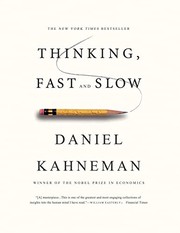
Daniel Kahneman · 2011 · Psychology
Read
Daniel Kahneman, a psychologist who won the Nobel Prize in economics, brings together decades of research, much of it with Amos Tversky, on how people actually judge and decide. He describes two modes of thinking. System 1 is fast, automatic and intuitive; System 2 is slow, effortful and deliberate. System 1 handles most of daily life, relying on mental shortcuts that produce predictable errors such as anchoring, overconfidence and neglect of base rates.
Later sections cover prospect theory and loss aversion, which challenge the model of fully rational economic actors, and the gap between the experiencing self and the remembering self. The book is long and dense but clear. Some priming studies it cites have since failed to replicate, a problem Kahneman himself acknowledged.
Key insights
- We build confident stories from whatever information is in front of us and rarely ask what is missing. Before deciding, list what you do not know.
- For forecasts, start from the outside view: how long and how costly similar projects usually were, then adjust for your specifics.
- Losses feel larger than equal gains, so people cling to the status quo and take bad risks to avoid a sure loss.
- Memories of experiences are shaped mostly by the peak and the ending, not the duration, so how something finishes matters a great deal.
- Before committing to a big decision, run a pre-mortem: imagine it has failed and write down the most likely reasons why.
Read it if you want to understand systematic errors in human judgement and are willing to work through a long, detailed book.