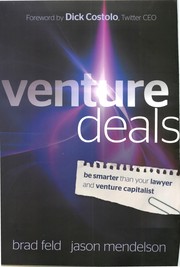
Be Smarter Than Your Lawyer and Venture Capitalist
Brad Feld · 2011 · Business
Want to read
Brad Feld and his Foundry Group partner Jason Mendelson wrote this guide to demystify venture capital financing for founders. They explain who the players are, how venture funds raise and make money, and how a fundraising process typically unfolds, from pitch materials to closing the deal.
The core of the book walks through a venture capital term sheet clause by clause. The authors argue that almost every term matters for one of two reasons: economics, meaning who gets what when the company is sold, or control, meaning who can make or block decisions. They cover valuation, liquidation preferences, anti-dilution protection, vesting, board seats and protective provisions, and also discuss convertible notes, negotiation and selling a company. Later editions update the material as startup funding has changed.
Key insights
- Sort every term-sheet clause into economics or control. Concentrate your negotiating energy on those two areas and spend less on boilerplate.
- A headline valuation can mislead. Liquidation preferences and the size of the option pool can change what founders actually receive when the company is sold.
- Understand how venture capitalists are paid, through management fees and a share of fund profits, because fund incentives shape how they treat your company.
- Run fundraising as a process: prepare your materials, approach several suitable investors in parallel and build momentum rather than pitching one firm at a time.
- Negotiate as the start of a long relationship. Winning a clause through aggressive tactics can cost the trust you will need with investors on your board.
Read it if you are raising, or may one day raise, investment and want to understand a term sheet before you sign one.