Protocol
Joint injection protocol:
- Inj TA 24 mg + Inj Amikacine + Inj HA
Intra-articular corticosteroids
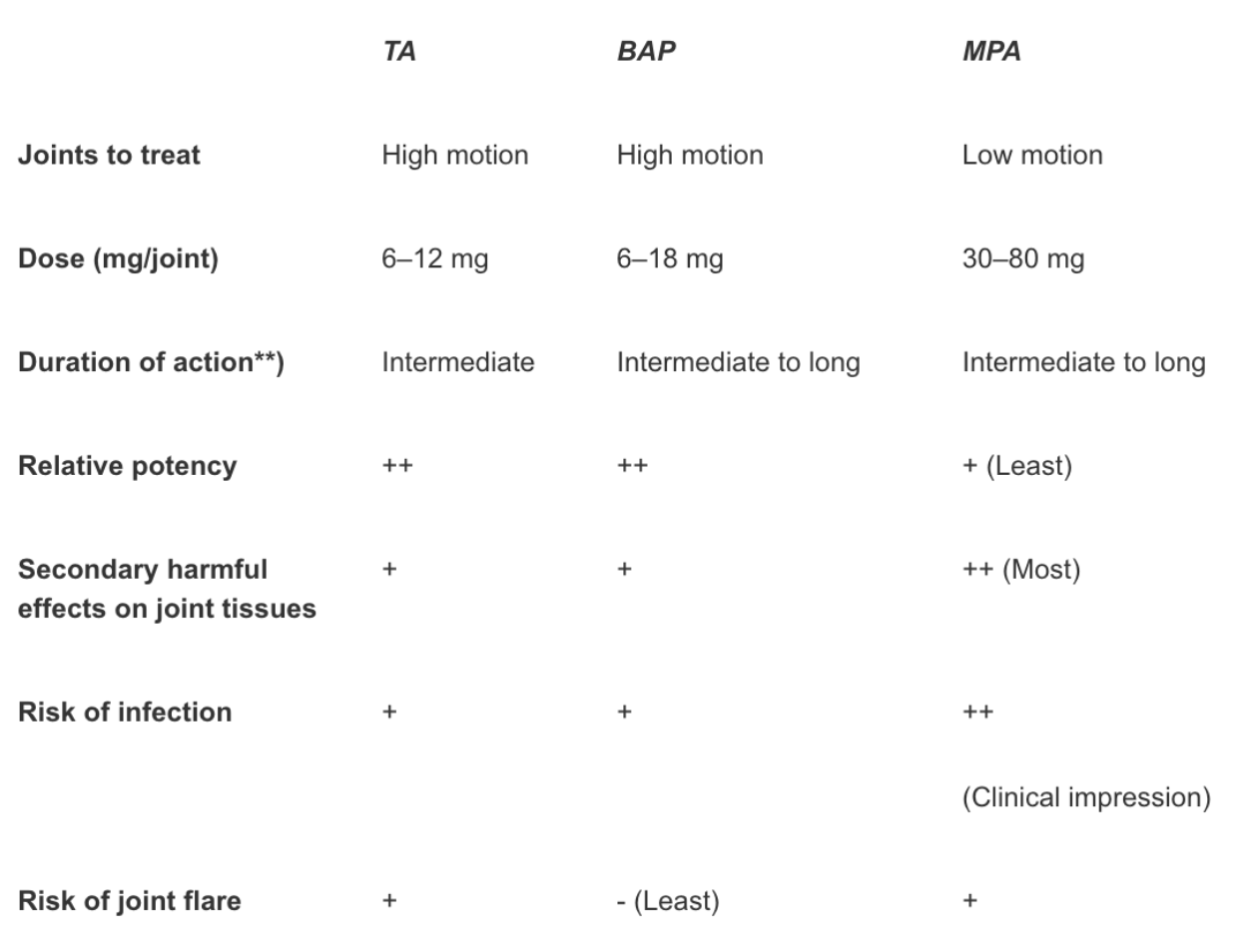
- Intra-articular (IA) corticosteroids are commonly used to treat joint problems in horses. Although a variety of corticosteroid preparations may be used intra-articularly, the 3 most commonly used drugs are methylprednisolone acetate (MPA)a, triamcinolone acetate (TA)b, and betamethasone acetate and sodium phosphate (BAP)c. The obvious clinical questions regarding IA corticosteroid use in horses are: 1) when to use which drug in what joint, 2) what is the most appropriate dose to use in different joints, 3) how can the detrimental effects of corticosteroids be minimized, and 4) how long will each drug provide clinical benefits to the horse. These and other questions regarding the clinical use of corticosteroids in horses will be addressed.
- Regarding potency, it has been estimated that BAP is more potent than TA, which is more potent than MPA. However, this is controversial and some veterinarians feel that TA is the most potent IA corticosteroid.
- A very simplistic approach in selecting an appropriate corticosteroid is to use TA or BAP in high motion joints (all joints other than the distal tarsal joints) and MPA in low motion joints such as the distal tarsal joints. However, there are exceptions to this generalization. Most joints are clipped prior to the injection, although there should be minimal problems injecting non-clipped joints if they are prepared adequately. I rarely combine antimicrobials (gentamicin or amikacin) with the corticosteroid and hyaluronan unless I feel there is an increased risk of infection associated with medicating a particular joint. A light bandage is place over the injection site, and oral phenylbutazone is given for 5 days to help prevent joint flare. Most horses are not worked for at least 1–2 weeks following injection, although an extended rest is not recommended unless the problem in the joint warrants a period of inactivity. The IA treatment may also be combined with systemic therapies such as IV hyaluronan (Legend), IM PSGAG (Adequan) or nutraceutical compounds depending on the clinical problem and finances of the client.
- The recommended dose of TA in the package insert is 6–18 mg/joint (1–3 ml). I usually do not exceed 12 mg/joint or 18–24 mg total dose.
- Negative Effects of IA Corticosteroids
- The 2 primary reasons not to utilize IA corticosteroids to treat horses with joint disease are the risk of synovial infection and the potential detrimental effects the drugs may have on articular cartilage and subchondral bone. Although infection is always possible, it is rare if good aseptic technique is used during the injection process. Combining antimicrobials with the injection should further decrease the risk of infection.
— VIN article, vin.com