At a glance
- Cause
- Borrelia burgdorferi, a bacterium
- Spread
- Ixodes ticks, only after the tick has been attached for more than 24 hours
- Species
- Most often diagnosed in dogs, humans, cats and horses
- Key signs
- Renal, neurologic and cardiac abnormalities, and joint disease
- Diagnosis
- Serology; a positive titre shows exposure, not necessarily disease
- Treatment
- Doxycycline for at least 4 weeks; relapse is possible
Overview
- Borrelia burgdorferi is the causative agent of Lyme disease.
- It is most commonly diagnosed in dogs, humans, cats, and horses, and causes a range of clinical signs from renal, neurologic, and cardiac abnormalities to joint disease.
Diagnosis
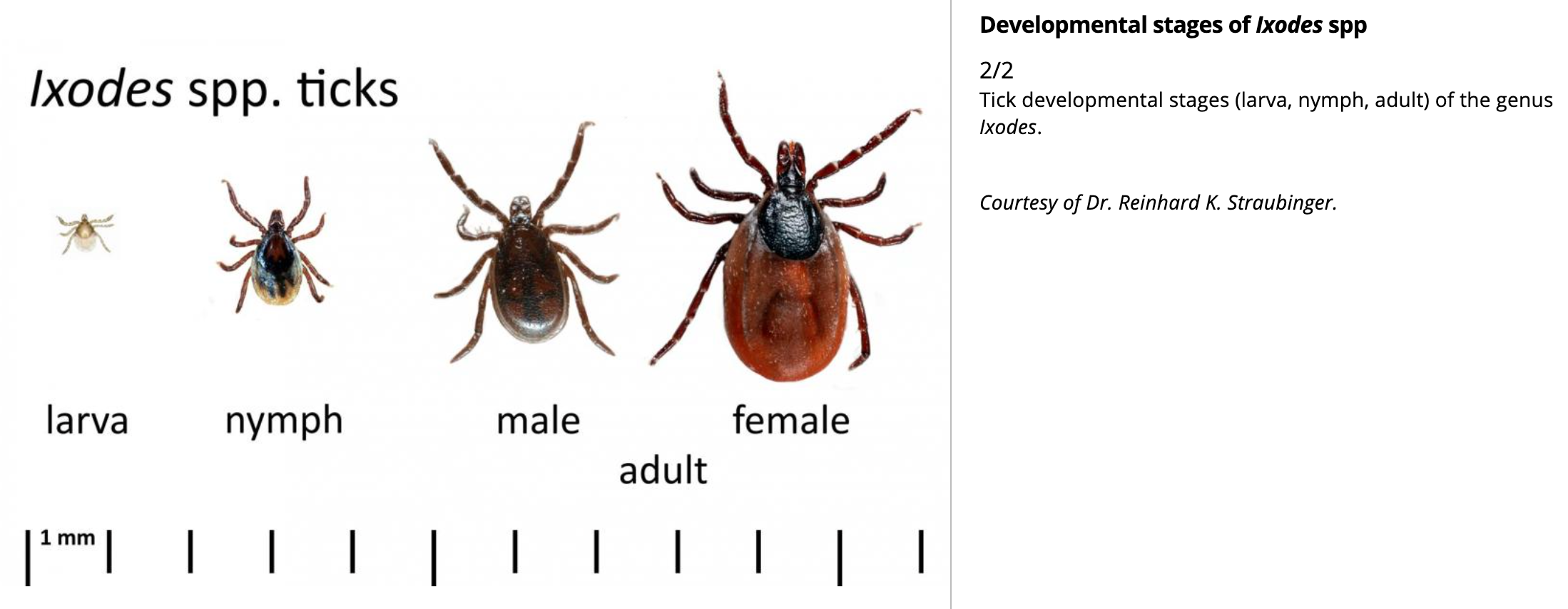
- It is transmitted by Ixodes spp. ticks but only after the tick has been attached for more than 24 hours. Direct detection of the bacteria is difficult and time-consuming; serologic assays are commonly used for diagnosis. Since a positive titer indicates exposure and not necessarily clinical disease, interpretation of titer results can be problematic.
Treatment and control
- When Lyme disease is suspected, the treatment of choice is doxycycline for at least 4 weeks. Relapse after apparently successful treatment is possible.