Source: swfh.com
Overview
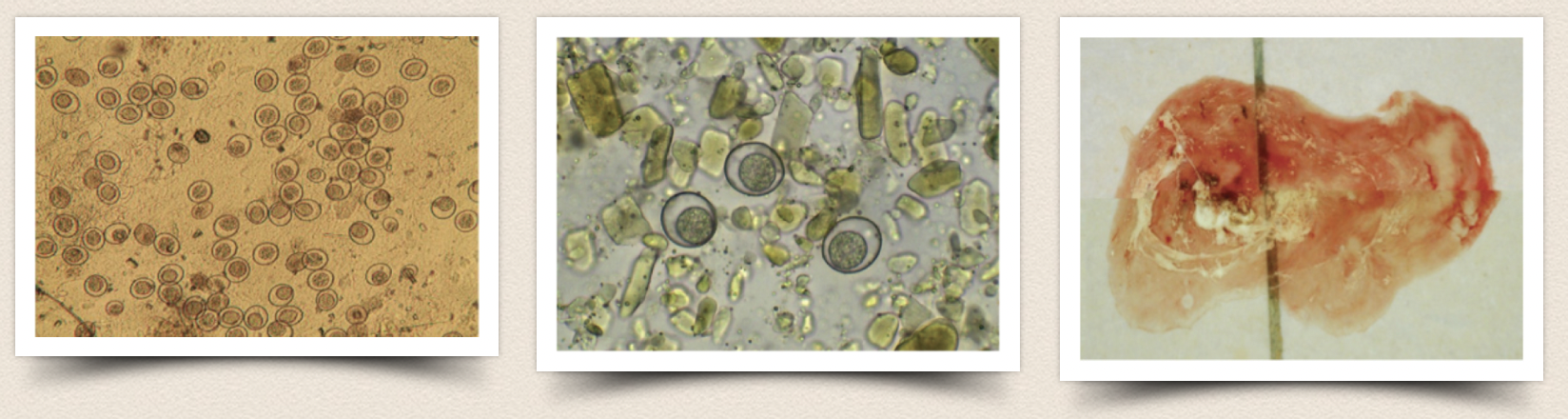
- Coccidia are a single cell parasite infecting the bowels of almost all birds like falcons, chickens, pigeons, canaries and parrots.
- Coccidia multiply inside the cells of the bowel and leads to its deterioration and this explains:
- The appearance of red colour (Blood) in the faeces.
- Dehydration and weight reduction because of inability to absorb food and fluids from the bowels.
- Transmission
- Food infected with coccidia given as food to falcons.
- Contaminated instruments and cages by faeces of infected birds.
Clinical signs
- Symptoms may appear in the infected falcon 72 hours after coming into contact with coccidia and eggs appearing in the infected falcons faeces.
- Symptoms are:
- Weak ability to fly.
- Poor appetite and aggressive attempts to hunt.
- Dehydration due to diarrhoea.
- Rapid and huge reduction in weight.
- Instability and movement shown indicating the falcon is suffering.
- Bad smelling faeces.
- Discharge of a partially digested food particles with faeces.
Diagnosis and differentials
- The symptoms as above.
- Direct microscopic examination of sample of faeces and the presence of coccidia eggs. This should be repeated with more than one sample to confirm the disease.
Treatment and control
- Giving anti-parasitic drugs and giving supportive diet with vitamins especially in sever cases.
Overview
- Coccidiosis is usually an acute invasion and destruction of intestinal mucosa by protozoa of the genera Eimeria or Isospora. Clinical signs include diarrhea, fever, inappetence, weight loss, emaciation, and in extreme cases, death.
- Coccidiosis is caused by protozoan parasites in the genus Eimeria. These parasites are host-specific, and many species occupy a specific segment of the intestinal tract.
Clinical signs
- Under heavy infections, birds may appear depressed with ruffled feathers. Diarrhea and dehydration may be present. Blood and/or clear to bright orange mucus may be present in the feces. Affected birds may appear pale in comparison to unaffected birds. Body weight and feed conversion may also be affected in heavy infections with more pathogenic strains of coccidia.
Transmission
- Coccidia is transmitted via oral ingestion of contaminated feces. Following ingestion, the parasite undergoes its complex life cycle within the intestinal tract, during which it replicates and ruptures the intestinal cells. The infected animal then sheds oocysts in the feces. After a few intestinal cycles of the parasite, birds can develop long-lasting, but species-specific, protective immunity. Challenge with a different species will lead to infection and disease, depending on the number of oocysts consumed.
Life cycle
- Oocysts – the reproductive form of coccidia from which the parasites can emerge, multiply in the gut and eventually cause illness in birds
- Sporulated – once oocysts become sporulated, they are infective, extremely tough and can survive exposure to bleach or other disinfectants and relatively high temperatures
Diagnosis and differentials
- Gross lesions are typically sufficient to diagnose coccidiosis. If necessary, a mucosal scrape can be taken for microscopic examination. Oocysts are easily seen under the light microscope.
Treatment and control
- Amprolium is an antagonist of thiamine (vitamin B1). Rapidly dividing coccidia have a high requirement for thiamine. Amprolium has a safety margin of ~8:1 when used at the highest recommended level in feed (125–250 ppm). Because amprolium has poor activity against some Eimeria spp, its spectrum has been extended by using it in mixtures with the folic acid antagonists ethopabate and sulfaquinoxaline. The primary use of amprolium today is for water treatment during clinical outbreaks.
- Sulfonamindes
- Folic acid antagonists include the sulfonamides, 2,4-diaminopyrimidines, and ethopabate. These compounds are structural antagonists of folic acid or of para-aminobenzoic acid (PABA), which is a precursor of folic acid.
- Diclazuril and toltrazuril are highly effective against a broad spectrum of coccidia. Diclazuril is used mostly for prevention at 1 ppm in the feed, whereas toltrazuril is used primarily for treatment in the water.
- 🔗
- Clopidol and quinolines (eg, decoquinate, methylbenzoquate) are coccidiostatic against early development of Eimeria spp by inhibiting mitochondrial energy production. Clopidol and quinolines have a broad species spectrum and are sometimes mixed together for synergism.